

Investing for beginners often feels overwhelming. There are countless platforms, unfamiliar terms, and strong opinions online about what you “should” do with your money. Many people delay investing not because they lack interest, but because they lack clarity.
The reality is simpler than it looks. Investing is not about predicting markets or getting rich quickly—it is about understanding how money grows over time and choosing tools that fit your goals and risk tolerance.
This guide is designed to explain investing clearly, without hype, complex jargon, or unrealistic promises.
This guide is written from an educational perspective and focuses on helping beginners understand how investing works in practice. It does not promote specific products or platforms, but instead explains the concepts, risks, and decisions involved when starting to invest for the first time.
What Does Investing Actually Mean?
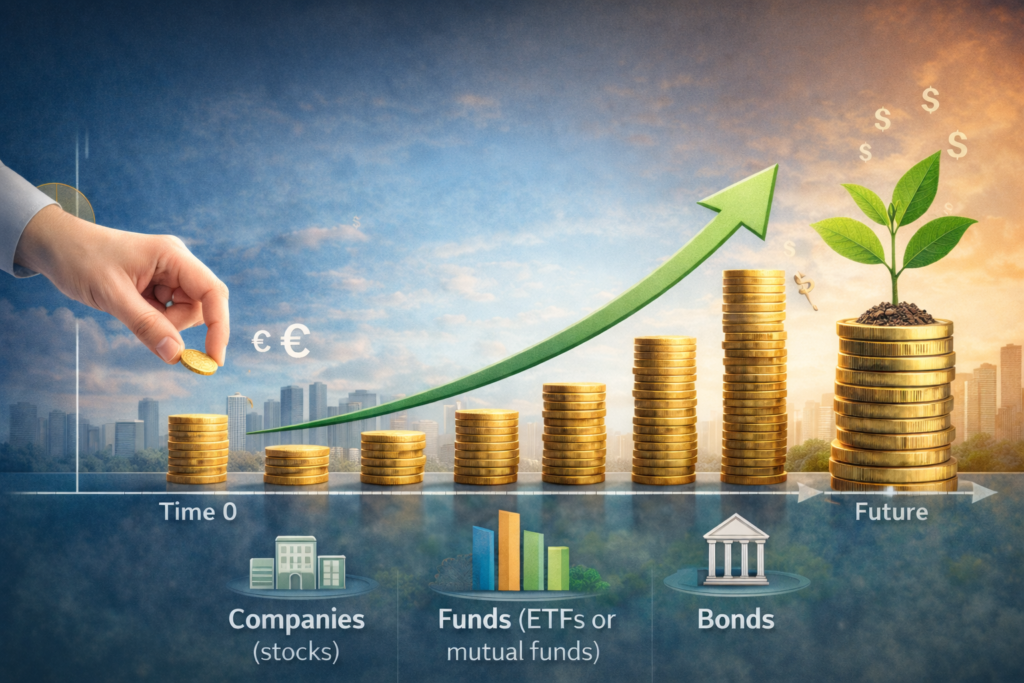
At its core, investing means putting money into assets with the expectation of long-term growth, rather than immediate spending.
Instead of letting money sit idle, investors allocate capital into things like:
- Companies (stocks)
- Funds (ETFs or mutual funds)
- Bonds or other financial instruments
The goal is not short-term gains, but gradual growth over time through compounding.
For example, investing $100 regularly over time is often more effective than trying to invest a larger amount all at once at the “right moment.” The consistency and time in the market tend to matter more than short-term decisions.
How Investing Is Different from Saving
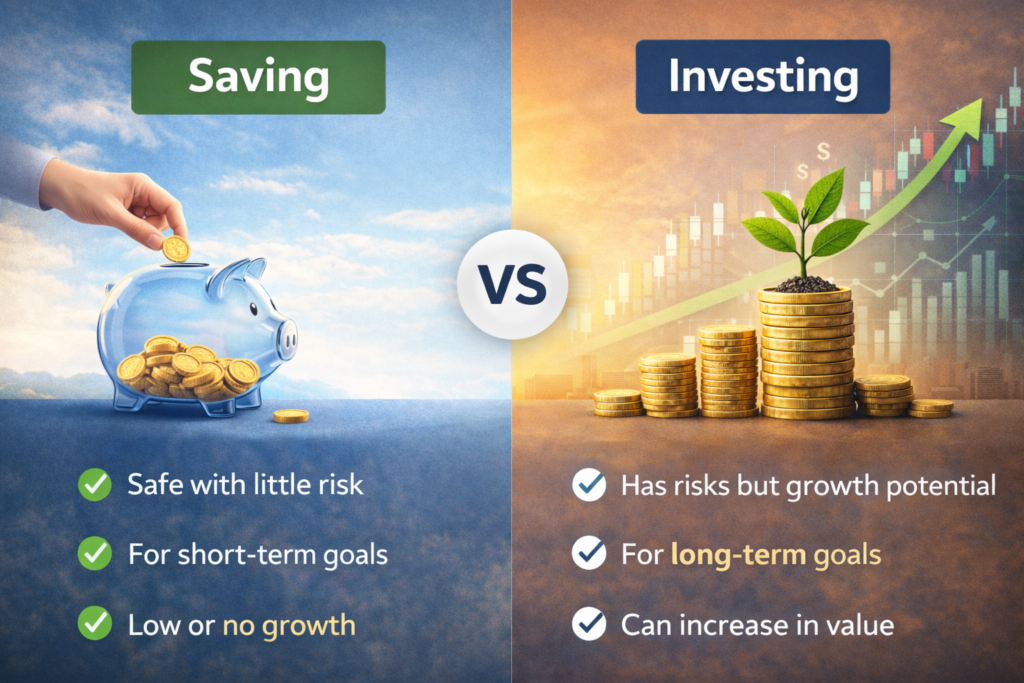
Saving and investing serve different purposes.
| Saving | Investing |
|---|---|
| Low risk | Higher risk |
| Short-term needs | Long-term goals |
| Predictable returns | Variable returns |
| Cash-focused | Asset-focused |
For beginners, the key takeaway is that saving and investing are not competing choices. Savings protect short-term stability, while investing supports long-term financial growth.
Savings protect money. Investing grows it.
Most people need both, not one or the other.
Why Beginners Should Think Long Term
One of the biggest mistakes beginners make is focusing on short-term market movements. Markets fluctuate daily, but long-term trends have historically rewarded patience.
Time matters more than timing. Starting early—even with small amounts—often matters more than finding the “perfect” moment.
Common Investment Assets Explained Simply
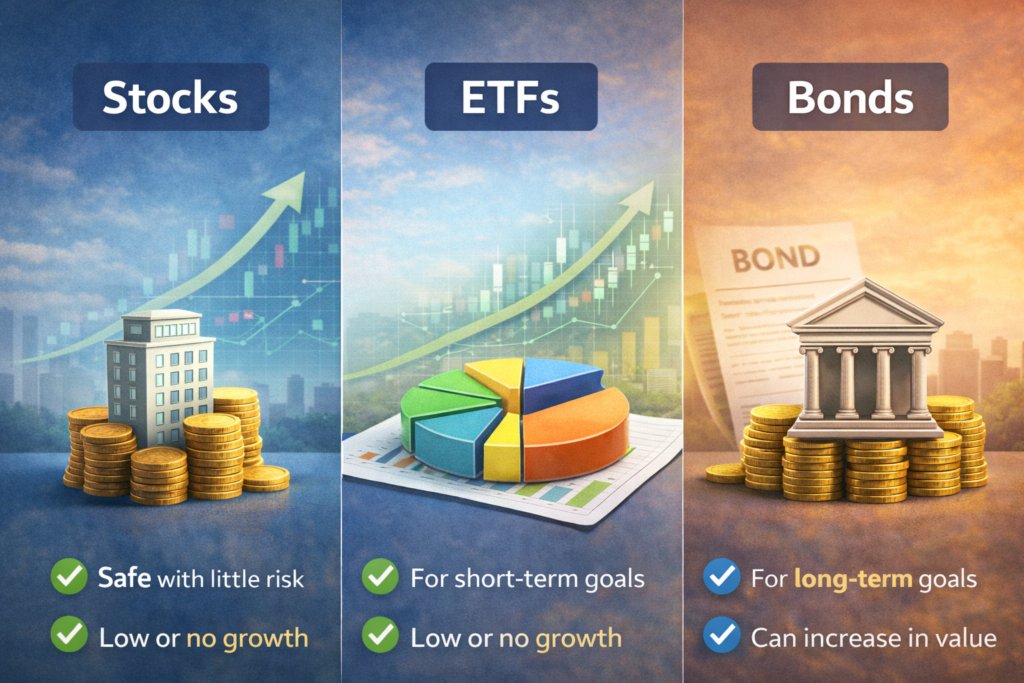
Stocks
Buying a stock means owning a small part of a company. Returns come from:
- Company growth
- Dividends (in some cases)
Stocks are volatile in the short term but historically strong over long periods.
ETFs (Exchange-Traded Funds)
ETFs bundle many stocks or assets into a single investment. They are popular with beginners because they:
- Offer diversification
- Have lower risk than individual stocks
- Are easy to buy and hold
Because ETFs provide diversification by default, they are often considered a practical starting point for beginners who want exposure to markets without managing individual stock selection.
Bonds
Bonds are loans to governments or companies. They usually offer:
- Lower risk
- Lower returns
They are often used to stabilize portfolios.
Understanding Risk (Without Fear)
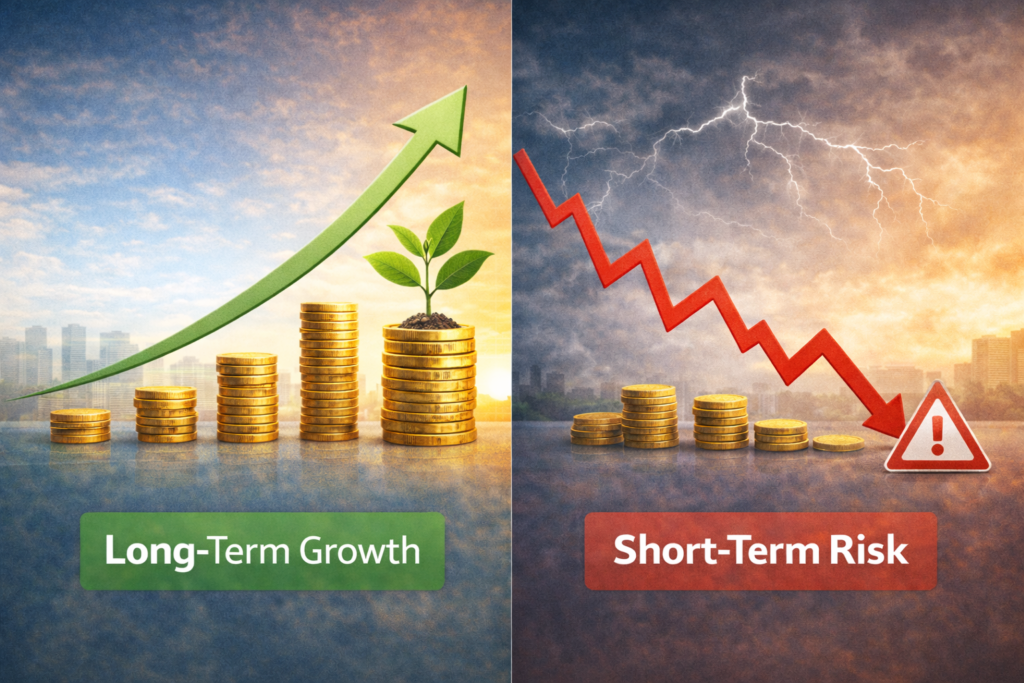
Risk does not mean “bad.”
Risk means uncertainty.
All investing involves risk, but it can be managed through:
- Diversification
- Time horizon
- Clear goals
Beginners often underestimate emotional risk—panic selling during downturns causes more losses than markets themselves.
Historically, long-term investing has reduced the impact of short-term market volatility. While past performance does not guarantee future results, understanding this pattern helps beginners avoid emotional decisions during market fluctuations.
What Beginners Should Avoid
Many first-time investors lose money not because markets fail, but because of avoidable mistakes:
- Chasing trends or hype
- Investing money needed short-term
- Ignoring fees and costs
- Overtrading
- Expecting fast results
Most beginner mistakes are not technical errors, but emotional ones. Learning how to stay consistent often matters more than choosing the perfect investment.
Investing rewards discipline, not excitement.
Choosing the Right Platform as a Beginner

Beginners should prioritize:
- Simple interfaces
- Transparent fees
- Regulated platforms
- Long-term usability
This is where many people choose brokers for investing and banks or neobanks for daily money, rather than relying on a single platform for everything.
Beginners should also verify whether a platform operates under a recognized financial regulator. Regulation does not eliminate risk, but it increases transparency and accountability.
Many beginners are unsure whether they should use a traditional bank or a broker to start investing, especially when both offer some form of investment access.
How Much Money Do You Need to Start Investing?
Contrary to popular belief, investing does not require large sums.
Many platforms allow:
- Small initial investments
- Fractional shares
- Regular monthly contributions
Consistency matters more than amount.
The Role of Regulation and Safety
Beginners should always verify that platforms operate under recognized regulators such as the Financial Conduct Authority in the UK or equivalent authorities elsewhere.
Regulation does not remove risk, but it reduces fraud and improves transparency.
A Simple Beginner Strategy (That Actually Works)
For most beginners, a reasonable approach looks like this:
- Build an emergency fund first
- Invest regularly (monthly, not sporadically)
- Focus on diversified assets (like ETFs)
- Avoid frequent buying and selling
- Review periodically, not daily
This approach is boring—but effective.
Why “Free Investing” Isn’t Always Free
Many platforms advertise commission-free investing. In reality, costs often appear in:
- Spreads
- Currency conversion fees
- Platform pricing tiers
Understanding how platforms make money is part of becoming a confident investor.
FAQs: Investing for Beginners
Is investing risky for beginners?
Investing carries risk, but avoiding investing altogether carries long-term risk as well—especially inflation.
Should beginners invest during market downturns?
Long-term investors often benefit from downturns, but only if they invest calmly and consistently.
Can beginners lose all their money?
Many beginners invest independently, but only after building a basic understanding of risks, costs, and long-term expectations.
How often should beginners check their investments?
Checking too often increases emotional decisions. Periodic reviews are healthier.
Is investing better than saving?
They serve different purposes. Investing is not a replacement for savings.
Can beginners invest without financial advice?
Yes, but education and caution are essential.
Final Thoughts: Investing Is a Process, Not an Event
Investing for beginners is not about mastering markets—it is about building habits, understanding risks, and staying consistent.
There is no perfect strategy, but there is a sensible one: start simple, stay patient, and focus on the long term.
The most important step is not choosing the “best” investment—it is starting with a clear mindset.
For beginners, the most important investment decision is not selecting a specific asset, but developing patience, discipline, and realistic expectations over time.
Disclaimer:
This article is for informational purposes only and does not constitute financial advice. Always conduct your own research or consult a qualified professional before making financial decisions.